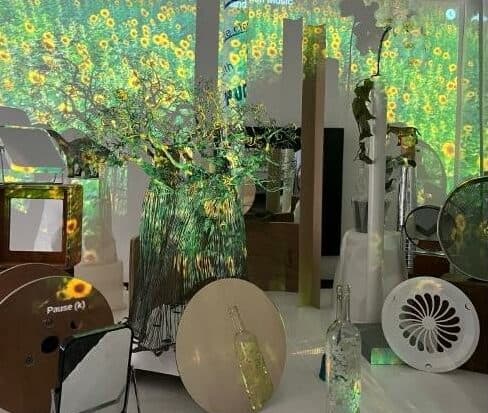
Reddam House Waterfall has unveiled a new Digital Landscapes & Light Atelier, an immersive educational space inspired by the globally recognized Reggio Emilia Approach.
The innovative learning environment was designed to encourage curiosity, creativity, and exploration through light, shadow, color, and digital interaction. According to school leaders, the atelier represents a decade-long vision aimed at transforming how young children experience learning.
A Space Designed Around Curiosity
The atelier was curated by atelierista Sarah Browne alongside Dr. Bev Evangelides, Head of Early Learning at Reddam House Waterfall. The concept was inspired by experiences at the Reggio Children educational center in Italy, particularly the renowned Ray of Light Atelier.
Dr. Evangelides explained that the project was inspired by children’s “natural curiosity,” describing the atelier as a place where light, shadows, and color become tools for exploration and dialogue.
The space transforms a traditional classroom into a multi-sensory environment where children can experiment with:
- Light projection
- Reflections and shadows
- Digital landscapes
- Transparent materials
- Interactive storytelling
- Color exploration
- Creative construction and design
What Is the Reggio Emilia Approach?
The Reggio Emilia philosophy originated in northern Italy after World War II and has become one of the world’s most influential early childhood education models. The approach emphasizes child-led exploration, creativity, collaboration, and the belief that children communicate through “100 Languages” — multiple forms of expression including art, movement, storytelling, music, and play.
Unlike traditional classrooms focused heavily on instruction and repetition, Reggio-inspired spaces are intentionally designed to encourage inquiry and experimentation.
The atelier at Reddam House Waterfall reflects these principles by integrating both analog and digital tools into one environment. According to Reggio Children’s official Digital Landscapes Atelier concept, technology is not intended to dominate learning, but to coexist with physical materials and creative exploration.
Blending Technology With Imagination
One of the most distinctive aspects of the new atelier is its integration of digital tools into sensory and artistic learning.
The environment includes:
- Video projectors
- Digital microscopes
- Interactive surfaces
- Mirrors and transparent structures
- Construction materials
- Multimedia storytelling tools
Educators say the goal is to help children move fluidly between physical and digital creativity rather than separating technology from hands-on exploration.
Sarah Browne described the atelier as “a context for inquiry, creativity, and self-expression,” where children can experiment with different forms of communication and understanding.
A Growing Shift in Early Childhood Education
The launch reflects a broader international trend toward more experiential and child-centered learning environments. Schools worldwide are increasingly redesigning classrooms to prioritize creativity, emotional development, collaboration, and sensory learning instead of rigid academic structures in early childhood education.
The atelier also reflects the idea of “slow pedagogy,” a Reggio Emilia principle emphasizing deep engagement, observation, and meaningful exploration rather than fast-paced instruction.
Supporters argue that these environments help children develop:
- Problem-solving abilities
- Emotional intelligence
- Creative confidence
- Communication skills
- Critical thinking
- Collaborative learning habits
Architecture as Part of Learning
The project was developed alongside architect Morné Schroeder of Fijn Architects and interior designer Joni Bruzzaniti. The design intentionally uses light, openness, texture, and reflection as active parts of the educational experience.
In Reggio Emilia philosophy, the environment itself is often described as the “third teacher,” meaning that physical spaces shape how children think, interact, and learn.
The atelier’s immersive design encourages children to continuously manipulate and reinterpret their surroundings through play and experimentation.
Looking Ahead
Reddam House Waterfall’s Digital Landscapes & Light Atelier represents more than a classroom redesign — it reflects a growing movement toward educational environments that value imagination, inquiry, and interdisciplinary learning from an early age.
As schools worldwide continue exploring new approaches to creativity and technology in education, immersive ateliers like this may become increasingly influential in shaping the future of early learning.