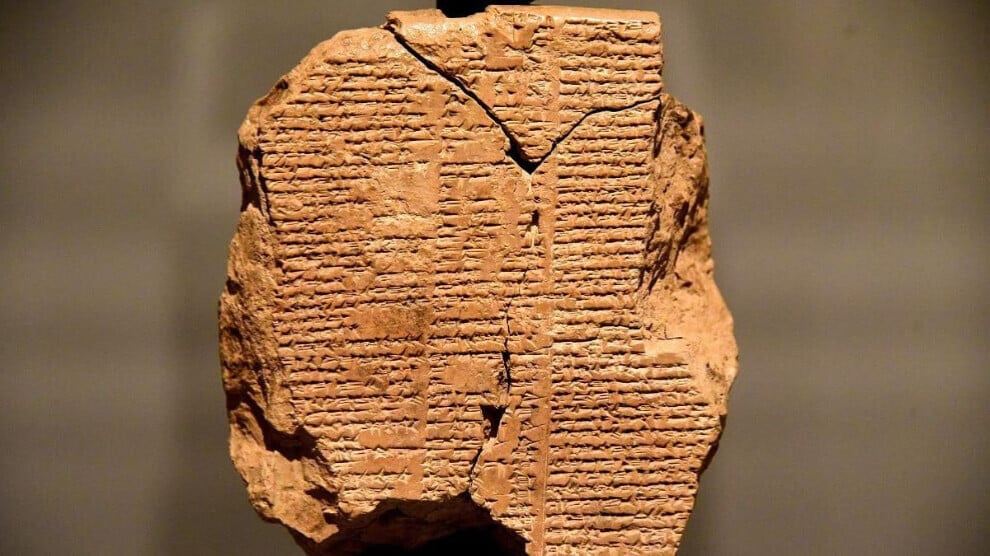
A collection of ancient Mesopotamian clay tablets stored for more than a century in Denmark has begun revealing extraordinary details about life in the ancient Near East — from anti-witchcraft rituals and royal records to what may be one of the world’s oldest beer receipts.
Researchers from the National Museum of Denmark and the University of Copenhagen recently completed a large-scale project to analyze, digitize, and decode the forgotten archive of cuneiform tablets, many of which are over 4,000 years old.
The project, titled Hidden Treasures: The National Museum’s Cuneiform Collection, is shedding new light on ancient civilizations from modern-day Iraq and Syria.
Ancient Writing Comes Back to Life
The tablets are written in cuneiform, one of humanity’s earliest writing systems, first developed around 5,200 years ago in Mesopotamia. The wedge-shaped symbols were carved into wet clay and used to record everything from trade transactions to royal histories and religious rituals.
Many of the texts were written in extinct languages such as Akkadian and Sumerian, making them difficult to study for decades. Researchers only recently began systematically identifying and translating the archive using digital tools and linguistic analysis.
According to Assyriologist Troels Pank Arbøll, the collection had remained largely unexplored despite being stored in Denmark for generations.
Magic Rituals and Anti-Witchcraft Ceremonies
Among the most surprising discoveries were tablets originating from the ancient Syrian city of Hama, which was destroyed by Assyrian forces in 720 BCE. Researchers believe the texts were originally part of a temple library that survived the city’s destruction.
The tablets contain:
- Medical treatments
- Incantations
- Ritual instructions
- Anti-witchcraft ceremonies
One particularly rare text describes a night-long ritual intended to protect Assyrian royalty from political instability and supernatural threats. The ceremony reportedly involved an exorcist reciting incantations while wax and clay figurines were burned as part of the ritual process.
Researchers noted that texts of this kind are extremely uncommon outside major Assyrian and Babylonian centers.
The Ancient Beer Receipt
Not all the discoveries were mystical or royal.
The archive also included ordinary administrative documents, including what researchers believe could be one of the oldest beer receipts ever discovered.
One 4,000-year-old tablet records the distribution of:
- 16 liters of high-quality beer
- 55 liters of ordinary beer
The beer was reportedly supplied by a man named Ayalli as payment to workers in the ancient city of Umma in southern Iraq.
Historians say beer played a central role in Mesopotamian society and was often used as part of worker compensation systems. Unlike modern beer, ancient Mesopotamian beer was thicker, less filtered, and commonly consumed through straws.
The receipt also highlights how writing originally evolved not only for literature or religion, but as a practical administrative tool for managing increasingly complex urban societies.
New Clues About Gilgamesh
Another remarkable discovery involved ancient king lists containing both historical and mythical rulers. Some versions of these lists mention Gilgamesh, the legendary king of Uruk and central figure of the Epic of Gilgamesh.
Researchers say the newly identified tablet appears to be a school text used for scribal education, but its historical significance is much larger.
According to Arbøll, these lists are among the few surviving artifacts that suggest Gilgamesh may have been based on a real historical figure rather than being purely mythological.
The finding adds another layer to the long-standing debate surrounding the historical origins of one of humanity’s oldest literary heroes.
Bureaucracy, Kings, and Daily Life
Beyond rituals and myths, the collection also provides insight into the daily workings of ancient civilization.
Researchers identified:
- Government correspondence
- Lists of goods and personnel
- Trade records
- Administrative accounts
- Political communications between local rulers and Assyrian kings
These records demonstrate how advanced Mesopotamian societies had already developed sophisticated bureaucratic systems thousands of years ago.
In many ways, the tablets reveal that ancient civilizations struggled with many of the same concerns modern societies face today: politics, economics, health, labor management, religion, and uncertainty about the future.
Rediscovering a Forgotten Archive
The Danish project is now transforming these once-forgotten artifacts into digitally accessible historical resources for scholars worldwide.
Researchers say the collection offers a rare window into how ancient people understood power, spirituality, administration, and everyday life.
More importantly, the tablets demonstrate that history is often preserved not only in grand monuments and epic stories, but also in ordinary records — receipts, letters, and practical documents written by people trying to manage daily life thousands of years ago.