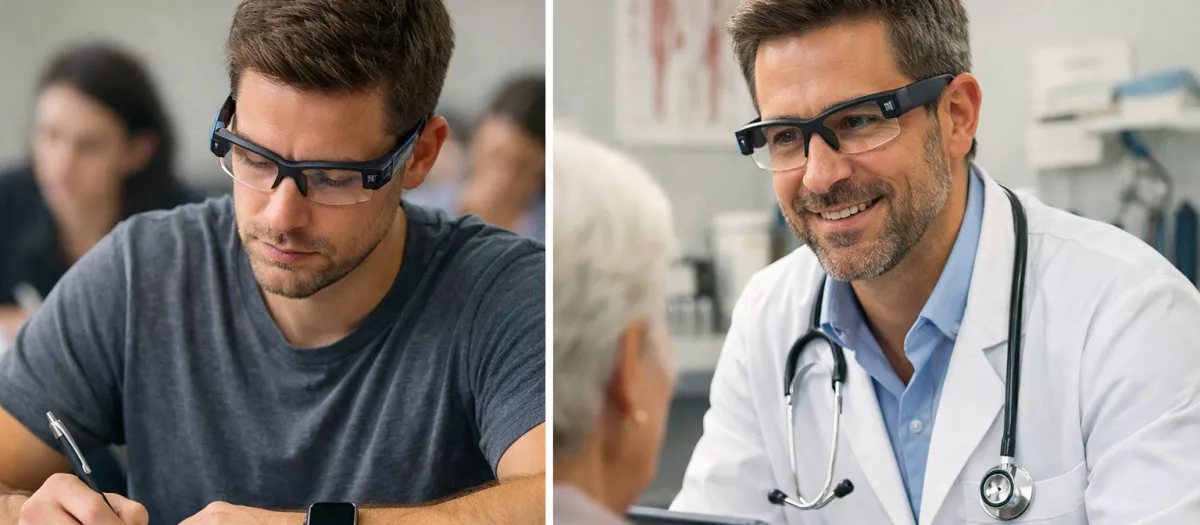

The recent discovery of a candidate for the MIR (Medical Intern Resident) exam in Spain using glasses and a smartwatch to cheat has sparked outrage in the medical community.
While this is a clear attempt at cheating that undermines equal opportunity and should be punished, the case has raised a question that goes beyond academic fraud: Is this incident a harbinger of a healthcare system where Artificial Intelligence (AI) will be an integral part of a doctor’s daily work?
The dilemma of protecting exams from technology
Thousands of applicants compete each year for a place in the healthcare training system, making the safety and fairness of the process paramount. However, technological tools are advancing at a breakneck pace and pose new challenges:
-
Almost invisible devices: Smart glasses, smartwatches and earbuds are becoming increasingly sophisticated and difficult to detect.
-
The physical barrier: Preventing this technology from entering classrooms poses an increasingly complex logistical and security challenge for examining boards.
Fraud is undeniable under the current rules, which aim to assess the candidate’s rote and individual knowledge. But the underlying debate points to an inevitable transformation in medical assessment and practice.
AI: From threat to indispensable clinical tool
The current landscape with Artificial Intelligence is strongly reminiscent of the internet’s emergence two decades ago. Initially, educational institutions attempted to ban its use in classrooms; over time, the web went from being seen as a «threat» to becoming an essential tool for any professional.
In the immediate future, doctors will not use AI to cheat, but to save lives through:
-
Instant queries: Access to vast databases and up-to-date medical literature in seconds.
-
Analytical support: More accurate analysis of complex diagnoses, X-rays, and symptom patterns.
-
Safe clinical decisions: Assessments based on the massive cross-referencing of medical histories and previous treatments.